


| Quantity: | |
|---|---|


Sodium Citrate
ZIO
Sodium Citrate is an essential organic acid salt meticulously derived from the neutralization of citric acid and high-purity sodium. In its physical form, it presents as crisp, white crystalline granules or a finely milled, free-flowing powder. It is entirely odorless, offering a very subtle, clean salty-sour flavor profile that blends unobtrusively into complex recipes. One of its most valuable physical traits is its rapid and complete solubility in water, contrasting with its total insolubility in ethanol. This immediate dissolution translates to a smooth, non-clumping integration into both liquid suspensions and dry solid formulations, a critical characteristic that prevents mechanical blockages and ensures uniform distribution during large-scale manufacturing processes.
As an exceptionally versatile raw material, this compound serves as a foundational ingredient across multiple demanding sectors, including food & beverages, pharmaceuticals, detergent production, and advanced water treatment facilities. Its structural ability to perform diverse chemical functions—ranging from precise pH buffering to emulsion stabilization and metal ion chelation—makes it an indispensable component for formulators looking to enhance the physical stability, longevity, and performance of both everyday consumer goods and specialized industrial solutions.
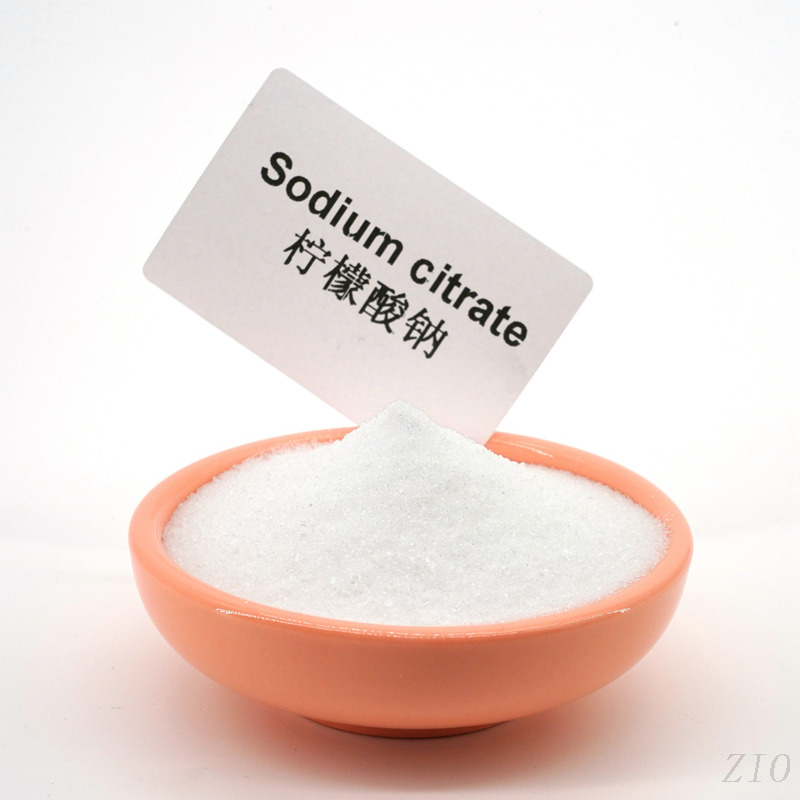
The core building blocks of our Sodium Citrate originate from naturally occurring citric acid, which is sustainably produced through the controlled fermentation of renewable, starch-based botanical materials, combined with purified sodium compounds. This natural derivation pathway ensures the final ingredient is inherently safe for direct human consumption, perfectly aligning with the growing global consumer demand for transparent, "clean-label" additives. Furthermore, the material boasts a 100% biodegradable profile and holds an FDA GRAS (Generally Recognized As Safe) designation, alongside top-tier eco-friendly safety ratings. This empowers manufacturers to formulate greener, more sustainable end-products without compromising on chemical efficacy.
Every batch of this material is manufactured under stringent controls to meet and exceed international standards for food additives and pharmaceutical-grade raw materials. To guarantee global compliance for procurement teams, the product is backed by comprehensive documentation, including COA, MSDS, GMP, Halal, and SGS testing reports. This rigorous certification framework effectively eliminates the risk of harmful heavy metals or impurities, guaranteeing absolute batch-to-batch consistency. Such purity is strictly required for highly sensitive applications, including infant nutrition formulas, clinical intravenous solutions, and injectable medications.
Property | Value |
Chemical Name | Sodium Citrate |
Molecular Formula | C₆H₅Na₃O₇·2H₂O |
CAS No. | 6132-04-3 (commonly as dihydrate) |
Appearance | White crystalline granules or powder |
Taste | Slightly salty and sour, odorless |
Solubility | Easily soluble in water, insoluble in ethanol |
pH Buffer Range | 3.0 – 6.2 |
Functions | Buffer, emulsifier, anticoagulant, preservative |
Because it is synthesized from natural botanical sources, Sodium Citrate undergoes an exhaustive series of quality control tests to verify its completely non-toxic nature. Major global health and agricultural authorities, including the FAO and WHO, impose absolutely no quantitative restrictions on its acceptable daily intake (ADI). This unrestricted status makes it a highly trusted, risk-free choice for formulators developing everyday food items, functional beverages, and critical pharmaceutical therapies, allowing brands to build long-term consumer trust through proven ingredient safety.
The compound's exceptionally high water solubility translates to immediate dissolution and uniform dispersion within mixing tanks. This dramatically reduces mechanical formulation time, lowers energy consumption during processing, and entirely avoids the risk of localized clumping in demanding products like carbonated energy drinks or dry-powdered pharmaceutical sachets.
Furthermore, Sodium Citrate maintains its structural integrity and consistent chemical quality under standard thermal processing and ambient storage conditions. It resists degradation and retains full functionality over time, ensuring predictable, reliable results for manufacturers engaged in long-term production cycles and extended product warehousing.
To maximize efficacy, store Sodium Citrate in a well-ventilated, cool, and dry warehouse environment, ensuring the original packaging remains tightly sealed. When maintained under these ambient conditions, the product offers an exceptional shelf life exceeding 12 months, remaining physically and chemically stable to significantly reduce inventory spoilage. Proper sealing prevents ambient moisture absorption—which is the primary cause of powder caking and clumping—and minimizes direct exposure to intense sunlight, even though UV light does not inherently degrade its core chemical properties.
While this ingredient is universally recognized as safe for the general population, individuals diagnosed with severe hypertension or chronic kidney issues should carefully monitor their overall sodium intake, as Sodium Citrate inherently contributes to dietary sodium levels. Healthcare professionals should be consulted before the regular administration of high-concentration clinical products.
For procurement and formulation teams utilizing this material in food or pharmaceuticals, it is imperative to strictly adhere to industry-specific regulatory guidelines (such as maximum allowable food additive limits and precise pharmaceutical grade dosage requirements) to guarantee total legal compliance and prevent improper formulation ratios.
Backed by a massive and stable monthly production capacity, we are fully equipped to support operational demands ranging from initial pilot runs to continuous, large-scale commercial manufacturing. Our flexible Minimum Order Quantity (MOQ) policies are designed to accommodate diverse procurement strategies. To guarantee product integrity across long-distance and cross-border transit, the material is securely packaged in 25kg heavy-duty, moisture-proof sealed bags, with large-capacity custom drum configurations available upon request. This meticulous approach to logistics ensures the powder arrives free of moisture and ready for immediate processing.
Understanding that every manufacturing process has unique requirements, we offer dedicated testing samples prior to bulk procurement, allowing your R&D teams to verify solubility rates and formula compatibility with zero financial risk. Additionally, our experienced technical support team provides expert guidance on recipe optimization, offering deep customization options that include specific particle mesh sizes and exact purity grades tailored to your proprietary production parameters.
Yes, it is exceptionally safe. Because it is derived from natural citric acid through controlled fermentation, it easily meets and exceeds stringent global safety standards. Health authorities have placed no limits on its acceptable daily intake. As a result, you will commonly find it acting as a reliable stabilizer and flavor enhancer in everyday dairy items, fruit juices, and commercial baked goods.
In the dairy industry, it functions as a critical emulsifying salt. When processing cheese, it interacts with milk proteins to prevent the separation of fats and liquids during melting, resulting in a smooth, uniform texture. Additionally, it actively regulates the pH environment of the dairy product, which helps maintain freshness, prevents premature spoilage, and significantly extends the commercial shelf life.
Absolutely. In the medical field, it serves as an indispensable anticoagulant, utilized extensively in blood collection and storage to prevent coagulation prior to testing or transfusion. Furthermore, it acts as a systemic acid-base regulator for patients requiring treatment for metabolic acidosis. For these applications, the material undergoes intensive purification to strictly meet pharmaceutical-grade compliance standards.
Its molecular structure gives it strong chelating properties, meaning it can effectively bind to disruptive metal ions—such as calcium and magnesium—found in hard water. By isolating these minerals, it acts as a highly efficient chelating agent that reduces scaling and mineral deposits in industrial pipes and boilers, thereby improving overall water quality and protecting expensive infrastructure from long-term damage.
