


| Quantity: | |
|---|---|


Sodium Citrate
ZIO
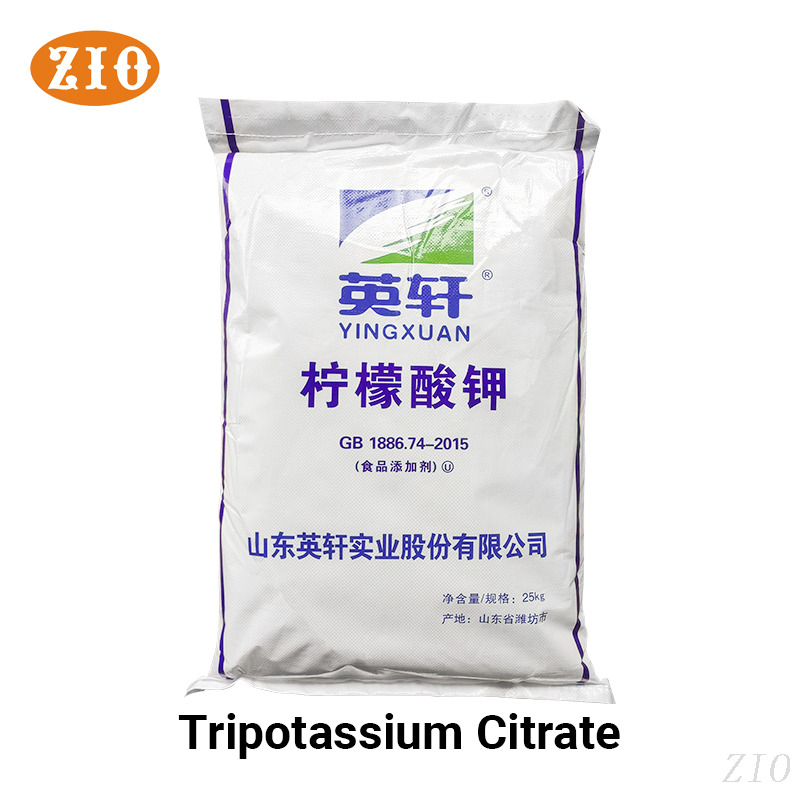
Potassium Citrate serves as the premium potassium salt of citric acid, presenting itself as a meticulously milled, fine white crystalline powder. When handled, it exhibits a smooth, free-flowing texture under dry conditions. Upon tasting, it delivers a clean, slightly salty, and mildly alkaline profile that integrates effortlessly into complex flavor matrices without imparting bitter metallic aftertastes. It is highly soluble in water while remaining completely insoluble in ethanol. Beyond its physical characteristics, this ingredient perfectly aligns with modern dietary demands—it is 100% vegan-friendly, non-GMO, and entirely free from common allergens, making it an impeccable choice for clean-label formulations requiring precise pH control and reliable electrolyte supplementation.
The versatility of this organic salt allows it to serve as a foundational ingredient across multiple high-value industries. In the food and beverage sector, it is a staple for premium hydration and sports drinks. Pharmaceutical manufacturers rely on it for advanced therapeutic formulations, while cosmetic chemists utilize its buffering capacity for sensitive skin care lines. Furthermore, it plays a critical role in industrial fermentation processes. Its unique dual functionality—acting simultaneously as a highly stable pH regulator and a bioavailable potassium source—distinguishes it significantly from conventional, single-purpose acid salts.
The synthesis of our Potassium Citrate begins with exceptionally high-purity citric acid, derived primarily through advanced natural fermentation processes, combined with pharmaceutical-grade potassium compounds. This rigorous sourcing strategy ensures that the foundational citric acid delivers uncompromising safety and environmental sustainability. Simultaneously, the premium potassium component introduces substantial nutritional value to the final compound. By maintaining strict control over raw material origins, we provide an ingredient that easily surpasses the performance of non-nutritive acid salts, offering formulators a dependable, clean-label solution that meets the most demanding manufacturing specifications.
Unlike standard synthetic additives that merely adjust acidity, this compound functions as a highly efficient, organic potassium source. Its molecular structure offers exceptional bioavailability, meaning the human body can absorb and utilize the potassium much more readily compared to traditional inorganic potassium salts. This superior absorption rate maximizes the nutritional efficacy of the end product, supporting vital bodily functions such as nerve transmission and muscle contraction. Consequently, it stands out as a premier selection for functional foods, advanced dietary supplements, and health-focused beverages designed for an increasingly discerning, health-conscious consumer base.
Property | Value |
Chemical Name | Potassium Citrate |
Molecular Formula | K₃C₆H₅O₇ |
Molecular Weight | 306.39 |
Appearance | White crystalline powder |
Solubility | Soluble in water, insoluble in ethanol |
Taste | Slightly salty and alkaline |
Stability | Stable under normal conditions; hygroscopic, should be stored sealed |
Manufactured in advanced facilities that strictly adhere to FDA, ISO, and other stringent international quality management systems, this product guarantees dual compliance with both food-grade and pharmaceutical-grade standards. It is universally recognized as safe by the FAO/WHO. To ensure absolute confidence for large-scale procurement, every batch undergoes rigorous third-party testing. These comprehensive analytical reports verify absolute purity, precise potency, and the absence of contaminants, thereby significantly reducing compliance risks and ensuring flawless integration into sensitive applications ranging from infant nutrition formulas to delicate dermatological skincare items.
The integration of this ingredient empowers formulators to expand their end-product health claims, supporting marketing narratives around cardiovascular health, muscle cramp prevention, bone fortification, and rapid electrolyte balance.
Designed with the realities of commercial manufacturing in mind, its exceptional water solubility guarantees rapid, residue-free dissolution in liquid matrices, such as functional beverages and oral pharmaceutical suspensions. This rapid integration completely eliminates the risk of sedimentation, ensuring a perfectly uniform distribution of active ingredients throughout the batch. While the powder exhibits mild hygroscopic tendencies, maintaining proper sealed storage preserves its pristine, free-flowing crystalline state. This predictable behavior ensures consistent handling, accurate dosing, and zero clumping during high-speed, large-scale production runs.
Due to its inherent mild hygroscopicity, it is imperative to store Potassium Citrate in a climate-controlled, cool, and dry environment. Packaging must remain tightly sealed when not in active use. Exposure to ambient moisture can induce clumping, which, while altering the physical flowability and handling characteristics of the powder, does not degrade its underlying chemical efficacy or nutritional value. Implementing strict inventory management and utilizing moisture-barrier liners in storage drums will preserve the optimal physical state of the material for extended periods.
While highly beneficial for the general population, formulations utilizing high concentrations of this potassium salt must account for specific demographic sensitivities. Individuals diagnosed with severe renal impairment, chronic kidney disease, or those placed on strict potassium-restricted medical diets must consult healthcare professionals prior to consuming highly fortified products. Excessive potassium intake in these specific vulnerable groups can lead to hyperkalemia, posing significant cardiovascular and systemic health risks.
Formulators must strictly utilize the appropriate, grade-specific variant of Potassium Citrate tailored to their distinct industry requirements—employing cosmetic-grade specifications for topical skincare formulations and pharmaceutical-grade variants for critical medical and therapeutic applications. It is essential to continuously monitor and adhere to evolving regional and international industry regulations regarding maximum allowable dosages, fortification limits, and specific formulation guidelines to guarantee absolute consumer safety and market compliance.
Yes, it is exceptionally safe and highly recommended for performance hydration products. It serves as a premium, bioavailable electrolyte source that rapidly replenishes potassium lost through sweat—a nutrient critical for preventing muscle fatigue and ensuring proper neurological function. Furthermore, it acts as an outstanding pH buffer that neutralizes excessive acidity, significantly improving the overall flavor profile and palatability of the beverage without adding unwanted sodium.
Backed by extensive medical literature and clinical efficacy data, its role in pharmaceutical applications is well-documented. Once metabolized, it effectively alkalizes the urine, which dramatically reduces the crystallization and formation of specific types of kidney stones, such as uric acid and calcium oxalate stones. Additionally, by improving systemic calcium balance and supporting bone density, it regulates the body's acid-base equilibrium to maintain comprehensive urinary tract health.
Absolutely. In the realm of personal care and cosmetics, it is an invaluable pH regulator. By precisely maintaining the optimal acidic environment in skincare formulations like lotions, creams, and toners, it significantly enhances the product's compatibility with the human skin barrier. This precise buffering action also prevents the degradation of sensitive active ingredients, thereby stabilizing the overall formulation and extending the commercial shelf life of the cosmetic product.
